Gallery
Prague - oil on canvas
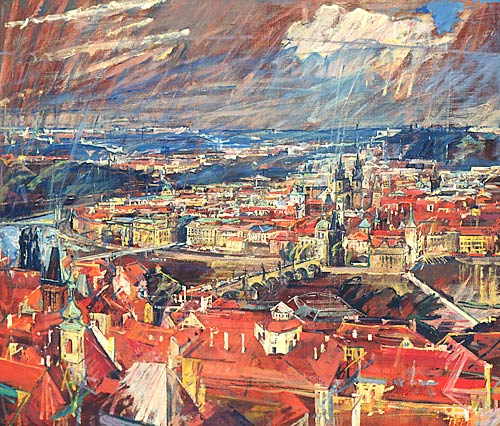
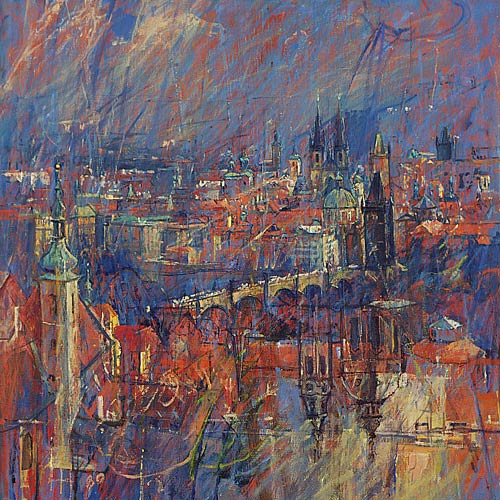
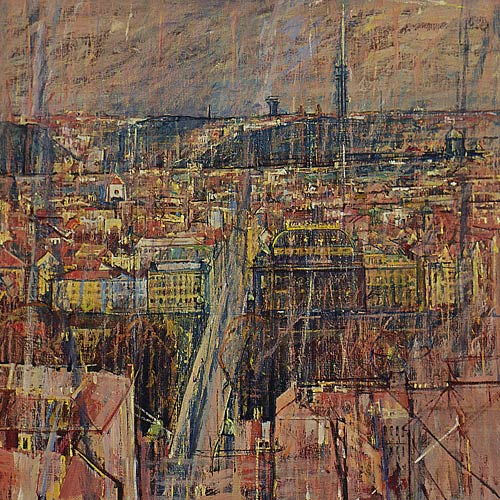
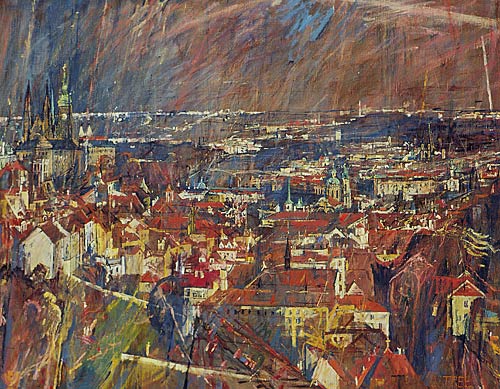
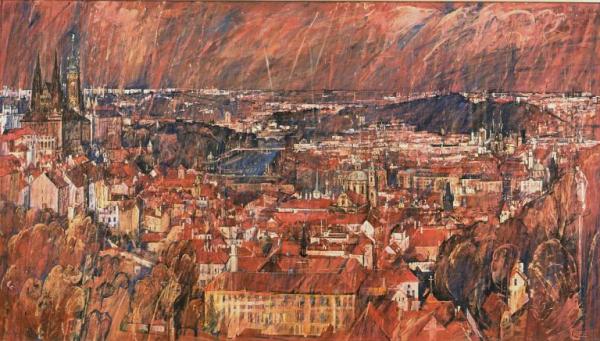
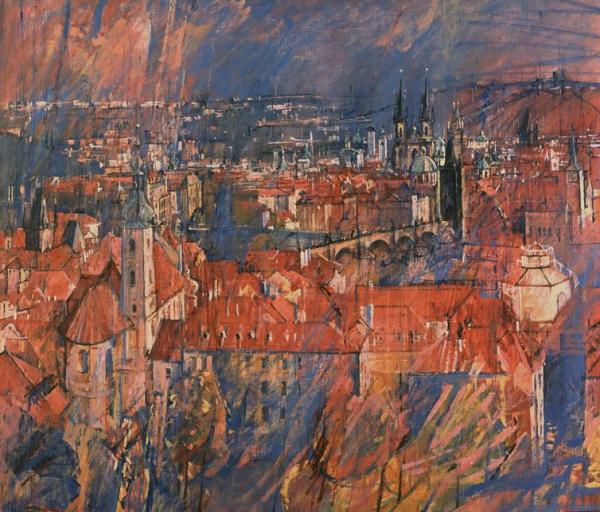
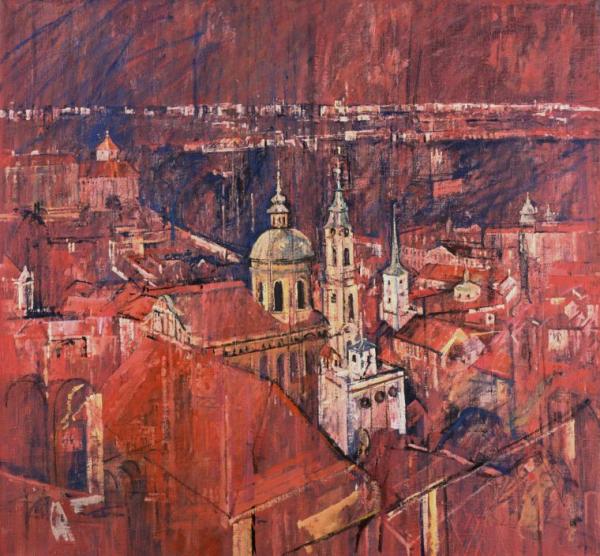
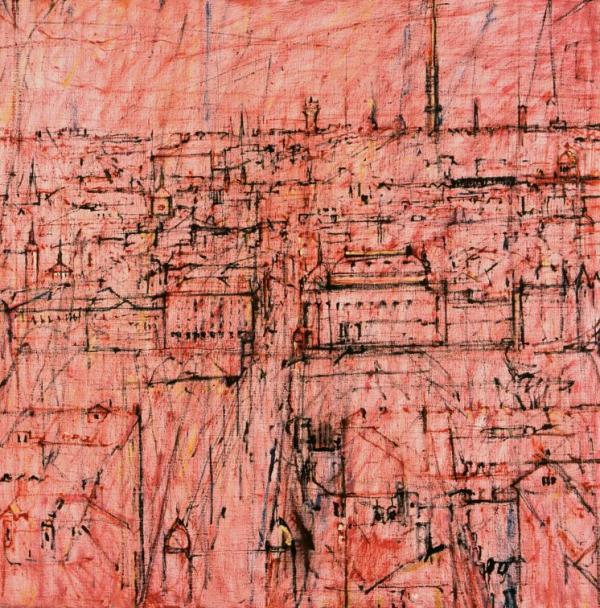
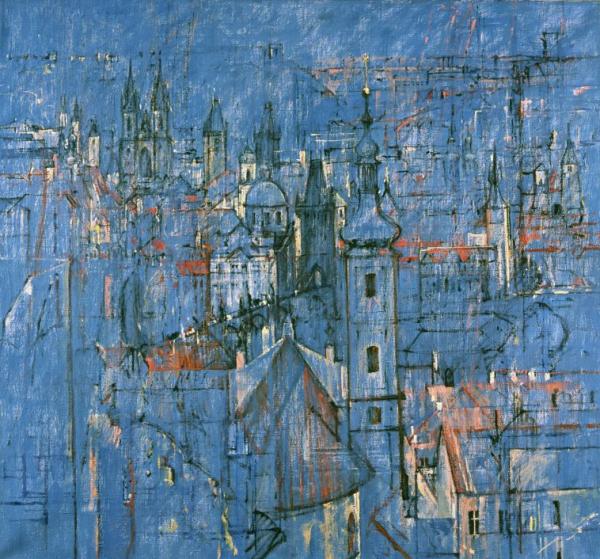
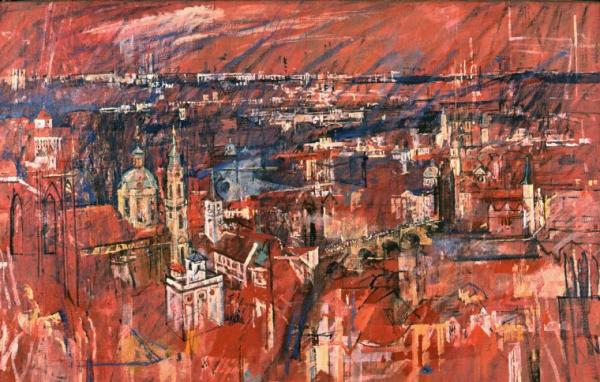
Prague - a city that stands apart from so many others
Let us close our eyes, and the centuries walk through time...
A future city emerges from a landscape full of wild vegetation, animals, insects, birds and fish. Forests are burned, and meadows, fields and small dwellings appear. The landscape becomes populated. Historical events displace the forces of nature. A great city is born. The powerful eras of the Přemyslids and the Luxembourgs give the city its unmistakable character. Rotundas, basilicas, churches, palaces, the city castle, residential quarters, bridges. Centuries of development have endowed Prague with the unique charm of its surroundings.
Antonín Slavíček paints Prague in 1908: the great city motif "Prague from Letná". He puts all his experience into it. He paints it without a commission, purely from an inner need to respond to the atmosphere of the time. It expresses his energy and euphoric joy.
A few decades later, the political situation in Austria brings Oskar Kokoschka to Prague. The city soon becomes an important subject in his work. Although he is a foreigner, his painting of Prague from 1936, which is in Washington, becomes another jewel among depictions of Prague. He says a magical sentence: "A work of art forms an indivisible unity beyond the interplay of time, place and events." This is characteristic not only of Oskar Kokoschka's paintings, but more generally as well.
There are different keys to understanding artistic intentions, but the climate of the time always plays a part. Where an artist works with a real, widely known subject, the painting also becomes a document of its time.
Admiration and wonder enter us when we allow ourselves to be carried away by the city's picturesque beauty. Yet it is the 21st century, and its historical mantle pulses with the hectic life of today. It is saturated with fragments of information; millions of gigawatts and megatonnes of food flow into the city. It is an enormous organism of living relationships. For the painter, these are above all the visible and invisible relationships between systems of points, the verticals of churches and cathedrals, and the horizontals of shapeless, elemental space. It is an anchoring of order and the desire for beauty, together with the mystery of creation by time and nature, its forces and humanity.
← back